Is using AI deceptive or cheating?

I cheated....
We really need to give ourselves some time to adapt to this changing landscape. It’s like when we went from using library books and actually visiting libraries for our research to jumping onto Google and Wikipedia as our go-to sources. Back then, a lot of people were hesitant to use those platforms for citations because they brought together all sorts of information from different places, which made some folks question their reliability. Now, here we are in a whole new era with AI. The tricky part is that many people expect to get quick, straightforward answers from just one question, but that often only scratches the surface. When you know how to create good prompts, AI can be a fantastic tool, making it way easier to find info and boosting how we work.

This situation feels a lot like when computers first hit the scene. There was a lot of skepticism because people feared they’d take away jobs and shake up traditional ways of working. To really understand AI, we should look back at its history and how it all started.
When I started out in the communication industry, I noticed that even basic things like call forwarding and those old programmed phone switches were kinda primitive forms of AI. Think about it: when you call an automated bank system to check your balance or see your transaction history, that’s AI in action, making life a bit easier.
Honestly, I think we’re on the brink of something big. The academic world is trying hard to integrate AI in a way that allows everyone—students, teachers, and researchers—to engage fairly and fully with this tech. It’s super important to remember that, ultimately, it’s the person using the technology who makes the biggest difference in how well it works.
My Keyboard warriors - let me help you with your arguments…… I mean you weren't going to let me off the hook that easy right? Ok so let's explore…
1. What would you say to someone who argues that relying on AI for information retrieval could undermine critical thinking and independent research skills?
That's a valid concern—but the issue isn’t AI itself; it’s how we use it. Think of AI as a calculator for the mind. Just like calculators didn’t destroy our understanding of math but instead shifted the focus from basic arithmetic to problem-solving and conceptual thinking, AI can do the same for research.
The real opportunity lies in using AI as a scaffold, not a crutch. For example, AI can help gather sources, summarize articles, or provide quick overviews. But the process of verifying, analyzing, synthesizing, and forming arguments? That still requires human judgment. In fact, the presence of AI demands more critical thinking—not less—because we now have to ask ourselves: Is this information accurate? Biased? Contextually appropriate?
So, rather than eliminating critical thinking, AI raises the bar for how we engage with information. It’s a call to develop better digital literacy skills, just like we had to do when search engines first disrupted traditional research methods.
2. Have you considered the potential ethical implications of using AI, such as issues related to plagiarism or the authenticity of one's own work?
Absolutely—and this is where clear ethical frameworks and transparency are crucial. The academic world is currently grappling with these issues, much like it did when Wikipedia entered classrooms and professors feared students would copy-paste instead of write.
But just like we learned to cite sources and teach students about plagiarism, we need to establish guidelines for AI use. This includes:
Disclosing when and how AI tools were used
Encouraging proper attribution if AI generates text or ideas
Educating users on where the tool ends and their original thought should begin
Also, consider this: AI isn’t the only tool that can be misused—so can books, the internet, even peer-reviewed journals if quoted out of context. The key lies in ethical intent and responsible application. AI doesn't create ethical problems; it magnifies existing ones, giving us a fresh opportunity to rethink and reinforce academic integrity.
3. How would you address critics who claim that the efficiency of AI may lead to over-reliance, ultimately stunting innovation and personal growth in creative fields?
It’s a fair worry, and we’ve seen similar anxieties with every tech advancement. When digital art tools like Photoshop emerged, many feared they would devalue traditional art. But what actually happened? New forms of creative expression exploded—from graphic design to animation to digital installations.
AI has the same potential. It can handle repetitive, tedious tasks—transcription, data sorting, idea generation—freeing up more time for deep thinking and innovation. The danger isn’t in AI itself, but in how we educate people to use it: as a collaborator, not a replacement.
In fact, some of the most innovative uses of AI come from creatives who experiment with the tool’s limits—musicians using it to remix soundscapes, writers brainstorming plot twists, or designers prototyping ideas faster than ever. Personal growth happens when we learn to co-create with AI, not surrender to it.
Final Word
So yes, there are risks—and they should be taken seriously. But let's not forget: every transformative tool starts out with uncertainty. The printing press, the telephone, the internet—all of them were disruptive, controversial, and misunderstood in their time. AI is no different.
What matters is how we choose to engage with it. Do we fear it and fall back, or do we step up and shape how it's used—for learning, creativity, and shared progress?
Let's not just adapt to the future—let’s lead it with intention.
Comments section is now open ...
Disclaimer: I like to think of myself as both smart and a bit lazy! With the help of AI tools, creating my posts has become much easier and more enjoyable. That said, I’ve still done my research and shared my thoughts in my own way. Technology has made it simple to present my ideas clearly, helping you to easily read and understand them without any tricky jargon or expressions.

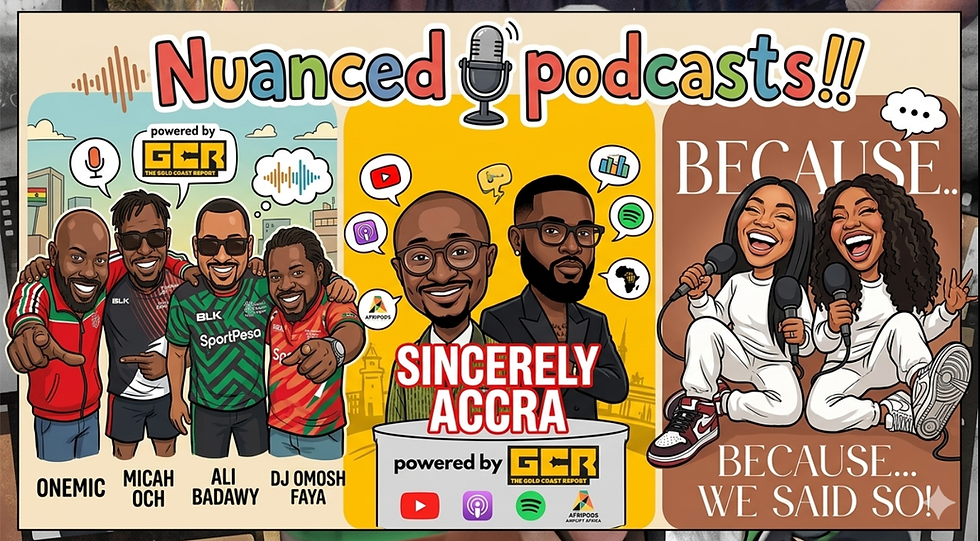
Sambaza, a Kenyan immigrant, is deeply passionate about podcasting and public speaking. As he delves into the art of podcasting and explores its many facets, he draws on his experiences as a diasporan and Pan-Africanist to create unique content. His dedication has earned him three nominations for Diasporan Podcaster of the Year among others. Additionally, Sambaza actively collaborates with other podcasters and collectives, continuously enhancing his skills as a creator.


Comments